


Film Review: Niu Lai
- 15 hours ago
- 5 min read
Every now and again, I love running across a review of something that would never otherwise have crossed my path.
Meet my friend and client Andrew Singer, who brings China to America, and America to China, without the filter of our political environment, which just might be skewing the presentation toward one side or the other. I have learned so much from reading his column.
But this is simply a film review, and it made me want to see the film. I hope it does the same for you. Enjoy.
- Christine Merser
Footnote: At the moment, Niu Lai is not officially available in the United States, although English-subtitled versions are on YouTube.
Here Comes the Cow: A Chinese Movie Sensation
Mooooo. This is the story about an animated indie film in China. A summer cow-buster. With a budget of less than $500 USD, this sleeper hit has grossed $8,000,000 USD and climbing.

Niu Lai is a campy movie about a dewy-eyed young cow of the same name (literally translated as Here Comes the Cow). The movie bombed during its initial theatrical release at a few hundred theaters in early August (it earned a whopping $50 USD on opening day). It was ridiculed mercilessly and suffered tremendous online vitriol in the two weeks after. It wasn’t just bad, it was epically horrible, said the web-a-sphere.

Then a curious thing happened. Call it morbid curiosity, summer boredom, FOMO or something more engrained in Chinese youth society as two commentators have suggested, but Niu Lai clicked.
“If it is that bad, I have got to see it” is sweeping China.
I wanted in on the action. I told myself it is intellectual curiosity, social commentary, not FOMO. And in a twist of irony after so many decades of America yelling at China about intellectual property protection, I watched a pirated version of this Chinese movie (with Chinese and English subtitles) on an American platform (YouTube).
Below I look at the making of the movie, its audience, and my takeaways.
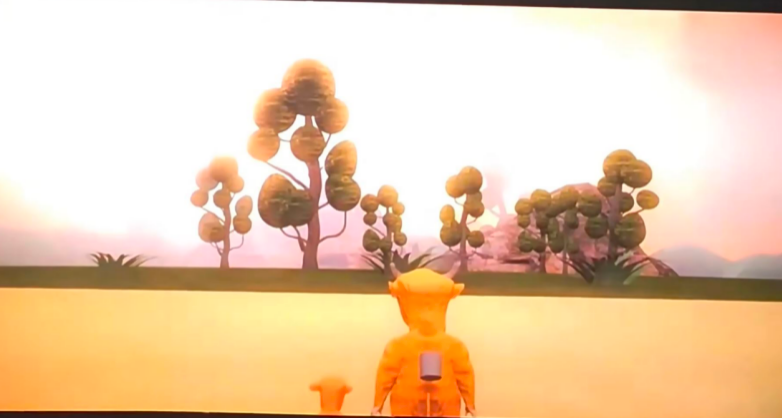
The Movie
Niu Lai is a passion project for a son, Xin Yumeng. His partner in this five-year, shoestring labor of love was his mother, Sun Lifang, who encouraged him, supported him, and became part of this two-person filmmaking, directing, producing, animating, writing, acting, and singing duo. They followed the rules and received approval from the government for public distribution. It was hoped to be more than just a movie shared among family and friends.
To be fair to the critics, the movie is homemade and doesn’t hide this fact. The animation, sound effects, and dialogue are stilted and awkward. There are gaps and disjointed blackouts between scenes. The colors are not always consistent. The rain and lightning effects and the desert migration are cartoonish. The ways the various animals pounce and jump make Mario seem like an Olympic gold medal winner. I found myself trying to figure out what was making the sounds of the lark’s wings flap, the grass snake’s body slither, and the herd’s walking strides. When mama kissed her calf, it was with a distinctly human smack.

(Homemade Niu Lai poster, photo by Robert Wu)
The Audience
Someone shot the video I watched from his/her seat. The movie screen is thus almost always at a slight angle and the image shifts up and down, side to side as the videographer’s hand got tired. The sound is not perfect because of how the pirated video was made. The audience snickers, murmurs, and outright guffaws at different times. The video cut off immediately at the end of the movie so I could not hear their final reaction. From what I did hear during the movie and have read since, the reaction was likely applause.
With Tim Curry’s death this past week, I found myself wondering whether Niu Lai could tap into the same kind of cult energy as The Rocky Horror Picture Show. Both are campy and both flopped at the initial box office. Rocky Horror then transformed into a cultural phenomenon. Niu Lai might be demonstrating the early stages of social engagement that continues to stimulate Rocky Horror five decades on.
I do not envision midnight showings in staid China, nor toilet paper and rice, but I could see energetic crowds continuing to respond to the characters and story, dressing up, and acting out their favorite scenes. There is a fair amount of rain. This is not to suggest that Here Comes the Cow will ultimately rise to such lofty heights as Rocky Horror. For one thing, the music is not nearly as fabulous (Time Warp, Sweet Transvestite, Meat Loaf, and more) nor are the characters as rich. Even so, this film did not deserve the animus flung its way. At the same time, with such a bleak theater opening, maybe the animus was necessary to jumpstart the movie to a viable public life.

The Meaning
Others have noted that Niu Lai is attractive because it feels authentic, a piece of art absent AI; that it speaks to a bubbling mass of discontented youth straining under increasingly strict social and political control coupled with economic and occupational challenges and fewer outlets for self-expression; that it is a classic underdog story in an over-technologied, super-processed world.
The movie is all of the above, but it is also something simpler: a sweet, dreamy, coming-of-age tale of family bonds, of friendship, of surviving, of living and learning and ultimate sacrifice. Niu Lai, also called Yunlai (Here Comes the Cloud) by his mother, is different from birth. He struggles to stand, literally, on his own two (four) feet. He is unusually skittish and does not fit in with the other calves. He is guileless, yet sincere and open, sometimes to his
detriment, other times to his benefit.

Niu Lai’s mother raises him as any (human) parent would. She offers guidance and instruction on what to avoid, where there is danger, how to take care of himself, and what to eat. She encourages him to think positively about his self-image and also to take chances and challenge himself. This mother-son connection ties in well with the oft-repeated sentiment that China is a society where parents do not say “I love you,” but show it instead.
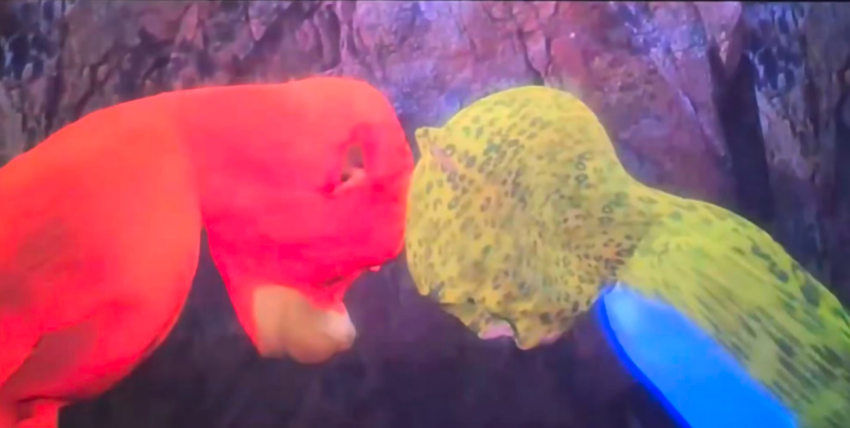
The bond that develops between Niu Lai and Baola, the young, motherless leopard, is that of iron-clad BFF. It is a relationship that is at first feared by the group. Will this predator, always an enemy before, turn against us? Can there be trust, let alone friendship? Niu Lai sees none of this. And for his part, neither does Baola. They are there for each other through everything life throws at them up to an including the final twist.


Xin Yumeng wanted to tell a story. He and his mother have done exactly that.
Brad! Janet! – Niu Lai! Baola!


Comments